Daniel Carrasco García

Computer Engineering Student · University of Málaga

Projects

Kursaatélite

Kursaatélite is an innovative project developed by students from IES Kursaal in Algeciras, consisting of an experimental satellite designed in CanSat format. The main objective of this project is research and learning about space technology, as well as measuring environmental variables from the stratosphere.

The Kursaatélite is equipped with sensors capable of measuring fine particles (PM 0.5), ionizing radiation levels, temperature, and humidity. These data are crucial for assessing environmental conditions in the stratosphere and their potential impact on human health, especially in vulnerable groups like children and the elderly.

One of the project's most outstanding features is its practical and interdisciplinary approach, covering areas such as physics, technology, engineering, and biology. Students not only learn about the technical aspects of building and launching a satellite but also investigate the effects of radiation and other environmental factors on human health.

Research Areas:

  • Experimental satellites
  • Particle and radiation measurement
  • Space technology research
  • Environmental impact of radiation
  • Conditions in the stratosphere
  • Public health and environment

KursaalMars

KursaalMars Team

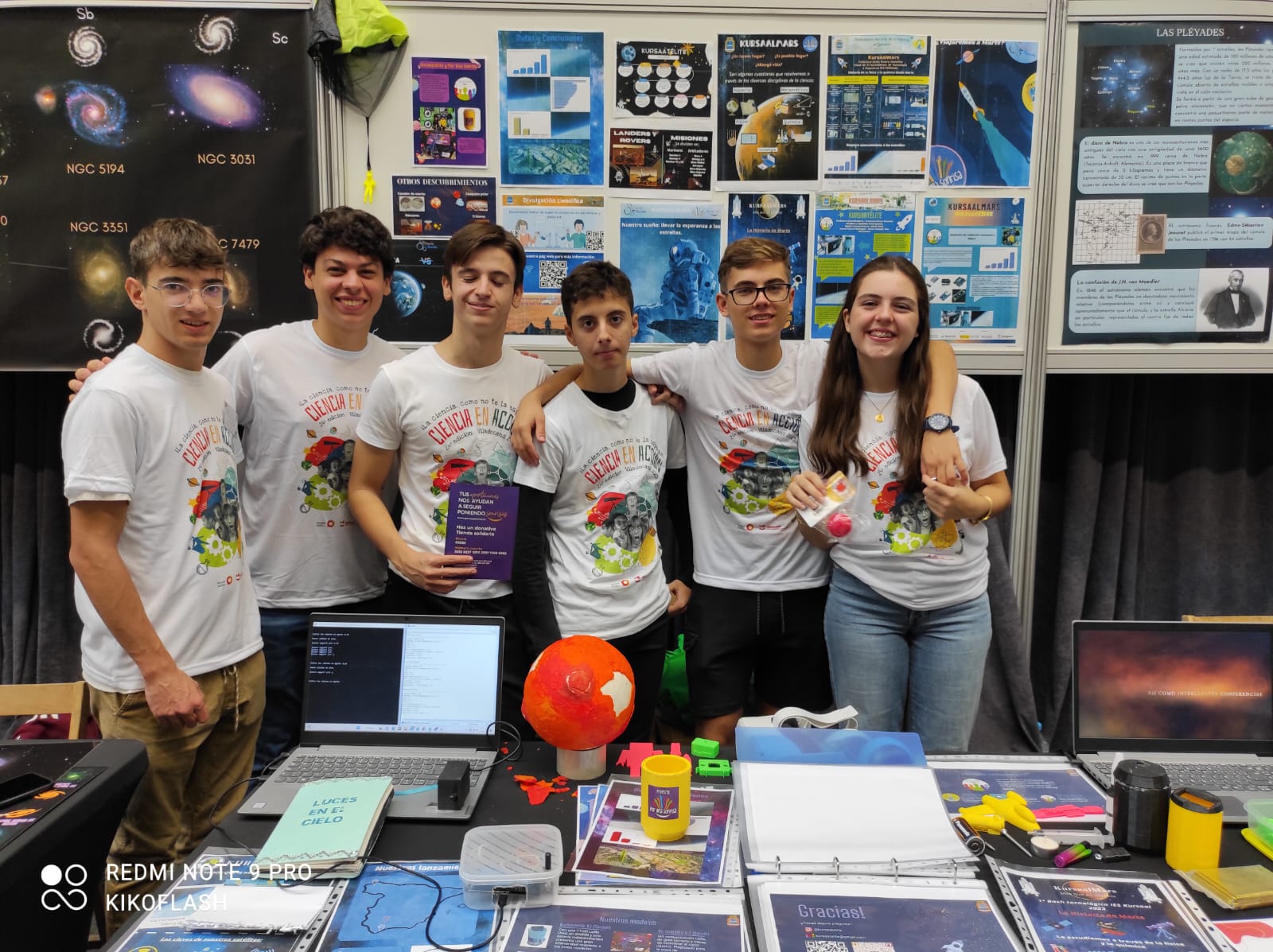
The KursaalMars project, developed by students from IES Kursaal in Algeciras, focuses on the study of the planet Mars from various scientific and technological perspectives. Through this initiative, students explore aspects such as formation, geological structure, atmospheric characteristics, and the possibility of life on Mars, raising questions about the Red Planet's habitability.

One of the project's key components is the development of KursaaTélite, an experimental satellite designed in CanSat format. This device incorporates sensors to measure fine particles (PM 0.5), ionizing radiation levels, temperature, and humidity. The goal is to evaluate how these factors can affect human health, especially in vulnerable groups, and determine the viability of life in conditions similar to Martian ones.

In addition, students have conducted various experiments to understand physical phenomena relevant to space exploration. These include simulating the Curie temperature, demonstrating how certain materials lose their magnetism upon reaching specific temperatures, and studies on water evaporation under low-pressure conditions, replicating the Martian environment.

The project also addresses the difficulties associated with a human trip to Mars, such as exposure to high levels of radiation due to the lack of a protective magnetic field, low atmospheric pressure, and low temperatures. These conditions represent significant challenges for human survival and require innovative solutions for future manned missions.

Research Areas:

  • Experimental satellite (KursaaTélite)
  • Particle and radiation measurement
  • Space physics experiments
  • Martian habitability studies
  • Environmental simulations
  • Space exploration challenges

Por Una Sonrisa

Por Una Sonrisa Project

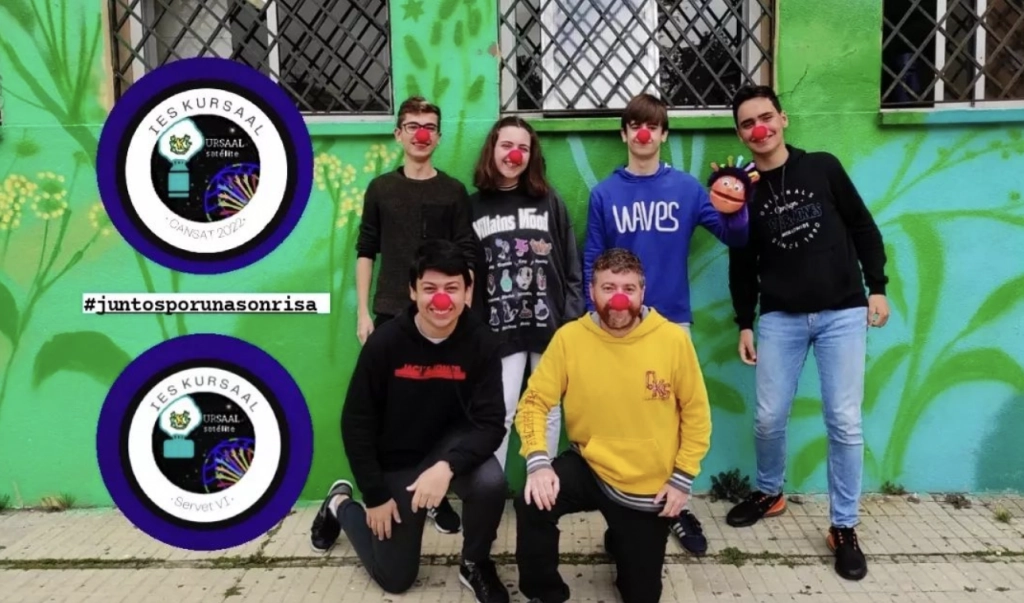
“Por Una Sonrisa” (For A Smile) is a solidarity initiative dedicated to decorating satellites with the motto “We bring hope to the stars”, to motivate children with cancer. All our activity revolves around bringing joy and hope beyond the hospital environment.

We organize exhibitions where we collect all awards using clown noses, a symbol of the association, thus reinforcing our cheerful and supportive identity.

The association is committed to emotional support for minors with cancer and their families, with constant activities and campaigns. Our work includes volunteering, solidarity events, awareness raising, and satellite decoration, as part of a catalog of projects that transmit joy and hope.

Action Areas:

  • Satellite decoration
  • Emotional motivation
  • Traveling exhibitions
  • Symbolic awards with clown noses
  • Volunteering and family support
  • Social awareness

CO₂ Sensor

Implemented CO₂ Sensor

The co2-kursaal.webnode.es page presents a project carried out by 3rd-year ESO students from I.E.S. Kursaal in Algeciras, whose main objective is to control air quality in classrooms by measuring carbon dioxide (CO₂) levels. This work arose in response to the need to properly ventilate enclosed spaces during the COVID-19 pandemic.

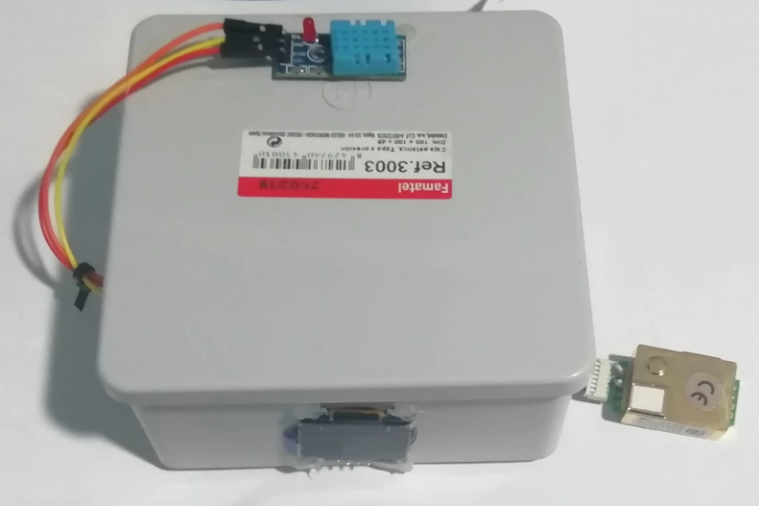
The system consists of a series of sensors placed in the classroom that measure CO₂ levels, temperature, and relative humidity in real-time. For this, students used devices such as the MH-Z19B sensor (based on NDIR technology), the ESP8266 microcontroller (NodeMCU), DHT11 or DHT22 sensors, and an SSD1306 OLED screen. Additionally, the assembly was done on breadboards and basic electronic tools like wires, soldering iron, and solder were used.

Data collected by the sensors is automatically transmitted via the online platform ThingSpeak, allowing real-time consultation of the classroom status via graphs. This not only facilitates students and teachers to take decisions on when to ventilate but also offers parents a way to verify environmental conditions from home. The channel used is number 1335280, accessible from the web.

During the data collection period, from March 22 to April 29, clear patterns were observed: CO₂ levels increased significantly during classes and decreased when ventilating or at the end of the day. One of the study's most relevant findings was that the use of HEPA filters did not produce a reduction in CO₂, leading to questioning their usefulness as a ventilation measure. As a conclusion, students proposed that this type of system could also be used in other public spaces, such as cinemas or museums, to guarantee better air quality.

Technologies used:

  • MH-Z19B Sensor (NDIR)
  • ESP8266 Microcontroller (NodeMCU)
  • DHT11/DHT22 Sensors
  • SSD1306 OLED Screen
  • ThingSpeak Platform

Main Features:

  • Real-time monitoring of CO₂, temperature, and humidity
  • Automatic data transmission to ThingSpeak
  • Visualization via graphs
  • ThingSpeak Channel: 1335280

SmartDoor

SmartDoor Project

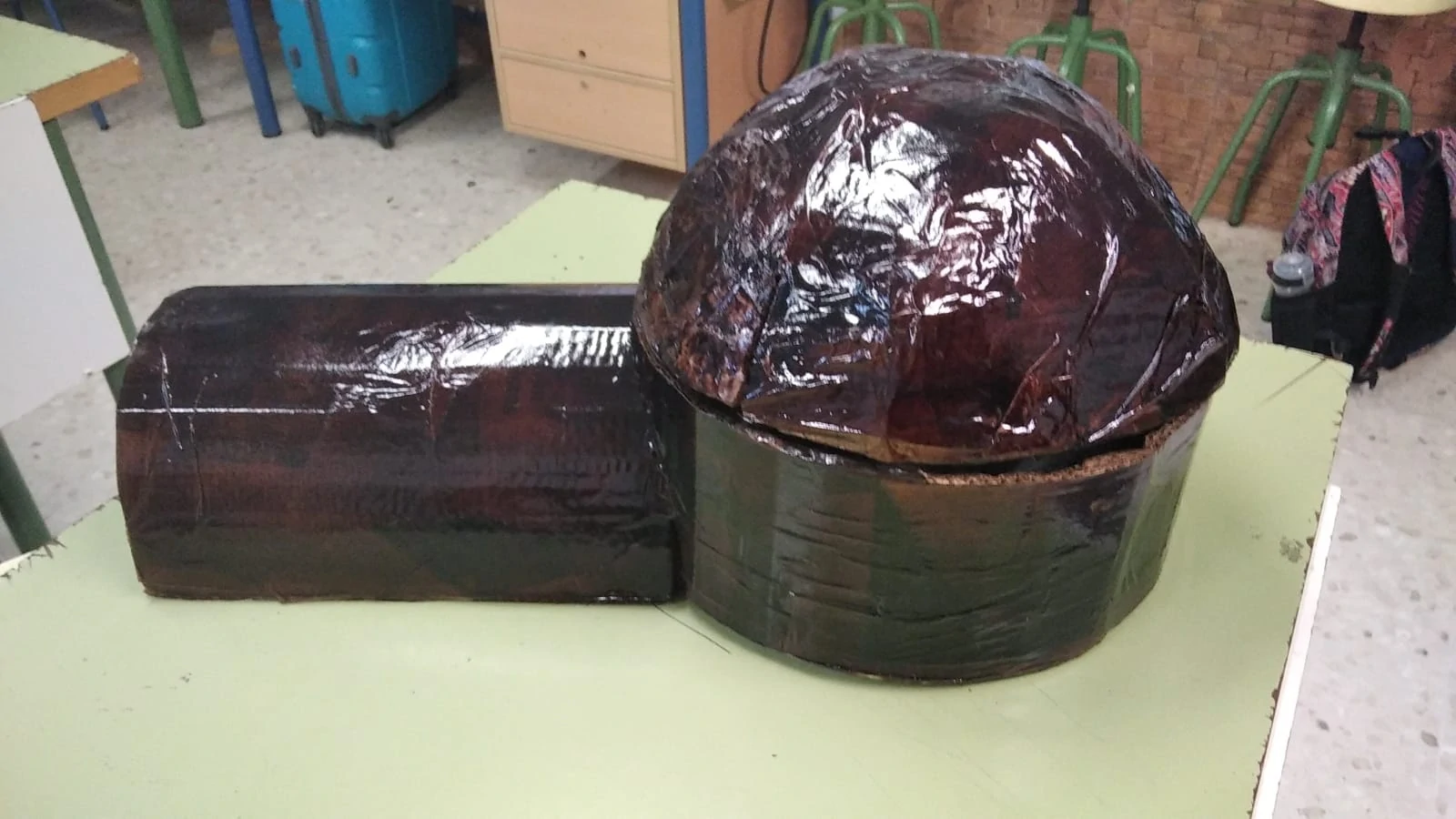
The Smart Door project, developed by 4th-year ESO students from IES Kursaal in Algeciras, focuses on designing an energy-efficient home adapted to the extreme conditions of Antarctica. The initiative seeks to optimize resource consumption, especially in heating, and facilitate the work of researchers in that environment.

One of the project's main innovations is an entry system that minimizes heat loss by avoiding direct contact with the outside. This translates into a significant reduction in the use of generators, which, in addition to saving fuel, contributes to reducing environmental pollution associated with the transport of supplies by ship.

The project is interdisciplinary, covering various areas of knowledge. In geology and history, materials used in the construction of shelters in Antarctica and their historical context were investigated. From physics, the thermal behavior and structural resistance of a spherical-shaped dwelling were analyzed. In technology, electronic components were incorporated to automate the entry system. Architecture and materials engineering focused on the structural design of the base, while biology provided information on human needs and the use of plant materials in construction.

Research Areas:

  • Energy Efficiency
  • Architectural Design
  • Thermal Physics
  • Automation
  • Materials Engineering
  • Environmental Sustainability

DustNet

DustNet is a pioneering project developed by students from IES Kursaal in Algeciras, whose main objective is air quality monitoring and particle suspension detection, especially in the context of the COVID-19 pandemic.

The DustNet system uses low-cost sensors and Wide Area Network technology (LoRaWAN) to measure PM10 and PM2.5 particle concentrations in real-time, as well as other environmental parameters like temperature and humidity. Data is sent to an online platform where it can be easily consulted and analyzed.

This project not only allows students to learn about sensor technology and programming but also contributes to the community by providing valuable information on air quality. Furthermore, DustNet can be a useful tool for scientific research and public policy development related to health and the environment.

Technologies used:

  • Low-cost sensors
  • LoRaWAN Technology
  • Online platform for data analysis

Main Features:

  • Real-time monitoring of PM10 and PM2.5 particles
  • Data transmission via LoRaWAN technology
  • Access to data through an online platform

My future projects as a computer engineer

Future projects in computer engineering

As a Computer Engineering student, I have a clear and ambitious vision of the projects I wish to develop throughout my professional career. I am especially passionate about developing applications that integrate artificial intelligence and quantitative finance, with the aim of designing robust, efficient, and more transparent algorithmic trading systems capable of dynamically adapting to global financial markets.

One of my medium-term interests is exploring the potential of quantum computing, especially in the field of cryptographic algorithm optimization and information security. I aspire to understand and apply these emerging technologies in practical and innovative contexts.

In parallel, I am committed to the social impact of technology. I intend to contribute to open-source projects focused on sustainability and energy efficiency, applying my knowledge in IoT, data analysis, and embedded systems. My goal is to develop intelligent solutions that support the fight against climate change and promote responsible resource use.

Furthermore, I plan to continue actively participating in hackathons, science fairs, and international challenges, combining creativity, engineering, and teamwork to solve real-world problems from a technological and interdisciplinary perspective.

Areas of interest:

  • Artificial Intelligence and Machine Learning
  • Quantitative Finance and Algorithmic Trading
  • Quantum Computing
  • Cryptography and Security
  • IoT and Embedded Systems
  • Sustainability and Energy Efficiency
  • Data Analysis